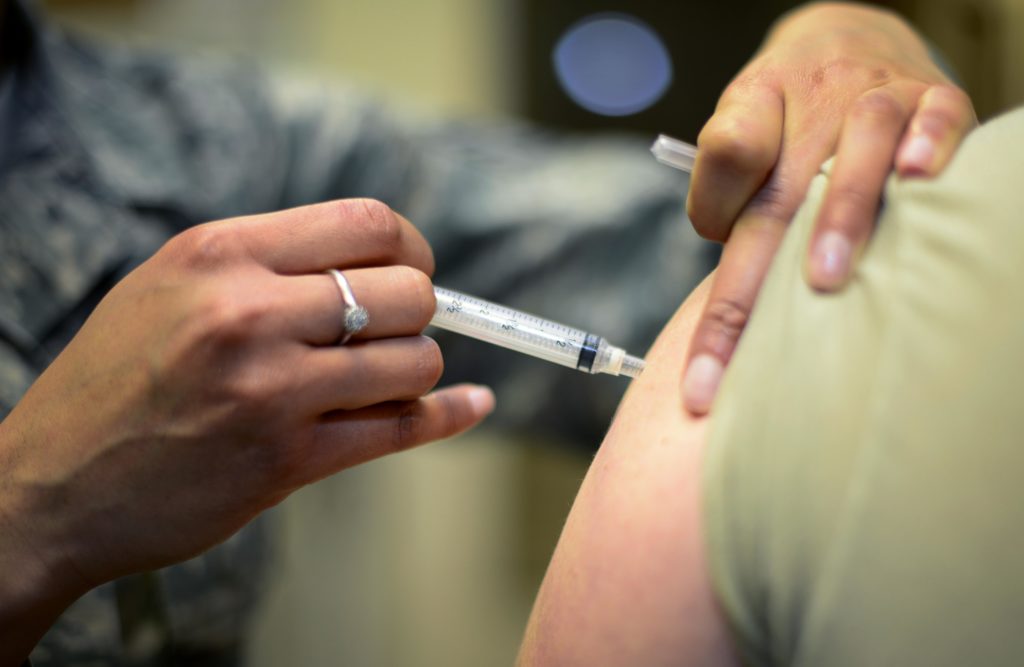
Last week, STAT published a story updating us on the H1N1 influenza vaccine-narcolepsy association. With a headline that looked like food for anti-vaxxers, I panicked a bit. So let’s look at the science behind this issue.
First off, let’s look at the differences between this case and the larger anti-vaxxer movement. First of all, the man who claimed vaccines caused autism did not do so with firm science backing his claim. Secondly, it was one scientist making that claim. The swine-flu vaccine-narcolepsy claim is one that many scientists are cautiously debating, looking at hundreds of thousands of data points as well as experimentally searching for a molecular mechanism that could explain the association. These scientists are also not crying “cause!” prematurely.
Back in 2009, H1N1 (swine flu) had everyone panicked. If you were in middle school at that time, God forbid you were absent or people would try to start rumors that you had swine flu (yes, I speak from experience). But also around this time, doctors in countries using the Pandemrix vaccine for H1N1 (Sweden, Finland, France, Norway, Ireland and England) saw a substantial increase in narcolepsy cases. For the past nine years, researchers have been trying to sort out the reason for this association. Some relate that rise in narcolepsy cases to a combination of genetic vulnerability and an adjuvant (a substance that increases the body’s immune response) in the Pandemrix vaccine.
Narcolepsy is a chronic sleep disorder leaving people feeling excessively sleepy throughout the day; their brains are unable to maintain the normal sleep-wake cycle. The underlying pathology is generally thought to be a lack of hypocretin (a molecule in the brain that helps regulate sleep cycles) caused by the immune system attacking hypocretin-producing centers in the brain–but of course this isn’t always the case because science is complicated. People may fall asleep at random times during the day, experience sudden muscle weakness while awake and/or experience sleep paralysis. As with almost all traits and diseases, narcolepsy has both environmental and genetic causes. People with a certain genetic variant of a human leukocyte antigen gene called HLA-DQB1*06:02, have a higher risk of developing narcolepsy. This variant, in combination with environmental factors that target the immune system and, most likely, other genetic factors, play a large part in the development of narcolepsy.
A study published in Science Translational Medicine in 2015 produced a possible way that the vaccine could have played a role in the rise of narcolepsy cases. Finland and Sweden were the first to report a rise in narcolepsy cases, and during the pandemic, both countries used Pandemrix, a vaccine containing an adjuvant called AS03 made by GlaxoSmithKline (GSK). This study, (conducted mainly by researchers affiliated with Novartis), showed that parts of the hypocretin receptors in the brain resembled H1N1 nucleoproteins (a nucleoptrotein is a nucleic acid bonded to a protein). The researchers saw that Pandemrix elicited antibodies that not only attacked H1N1, but also bound to the receptors for hypocretin, preventing hypocretin molecules from binding to the receptors. This leads to lower levels of hypocretin in the brain, possibly manifesting in narcolepsy symptoms. This only happened in individuals with genes associated with narcolepsy who had a narcolepsy diagnosis and received the Pandemrix vaccine; it did not happen in a control group.
Despite the fact that some countries saw an increase in narcolepsy cases, the risk of developing narcolepsy after getting vaccinated was still pretty slim. According to the World Health Organization, during the pandemic in Finland, the risk of narcolepsy among people 4-19 years old who were vaccinated with Pandemrix was nine times higher than those who hadn’t been vaccinated. But still, that risk is 1 in 12,000, meaning people ages 4-19 years old who received the vaccine had a 1 in 12,000 chance of developing narcolepsy. Among other age groups, researchers didn’t find an increased risk. In Sweden, children and adolescents vaccinated had a risk four times higher of developing narcolepsy—3 cases of narcolepsy per 100,000 vaccinated children and adolescents. Again, not a huge risk, but an increased risk all the same. In the UK, the National Health Service found the risk of developing narcolepsy among vaccinated children and adolescents was around 1 in 52,000.
However, as Helen Branswell reports in her article for STAT, China also saw an increase in narcolepsy cases during the H1N1 pandemic even though China did not vaccinate its citizens. Some scientists then wondered if the influenza could be the trigger for narcolepsy. The general idea surrounding the pathology of narcolepsy is that the immune system somehow destroys hypocretin-producing brain areas. Scientists believe that this autoimmune response may be triggered by infection, like swine flu or strep throat.
Branswell also reported that a new, unpublished study funded by the CDC did not find that the adjuvant in the vaccine led to a rise in narcolepsy cases. But, as she writes, “absence of evidence is not evidence of absence.” The lead author on the unpublished study told Branswell that despite his negative results, he believes there is an association between the adjuvant and the rise in narcolepsy cases.
Despite the notion among scientists that there could be a link between the vaccine and development of narcolepsy, it is not as simple as “vaccines cause narcolepsy.” In fact, as we now know, it’s much more complicated. Not NEARLY everybody vaccinated with Pandemrix developed narcolepsy. Despite an increase risk among some vaccinated individuals, the risk of developing narcolepsy was still quite small. A bunch of other factors, including genetics, infection and other influences that may not have been discovered yet, play a role.